By Thirty World Team · Aug 5, 2026 · 4 min read
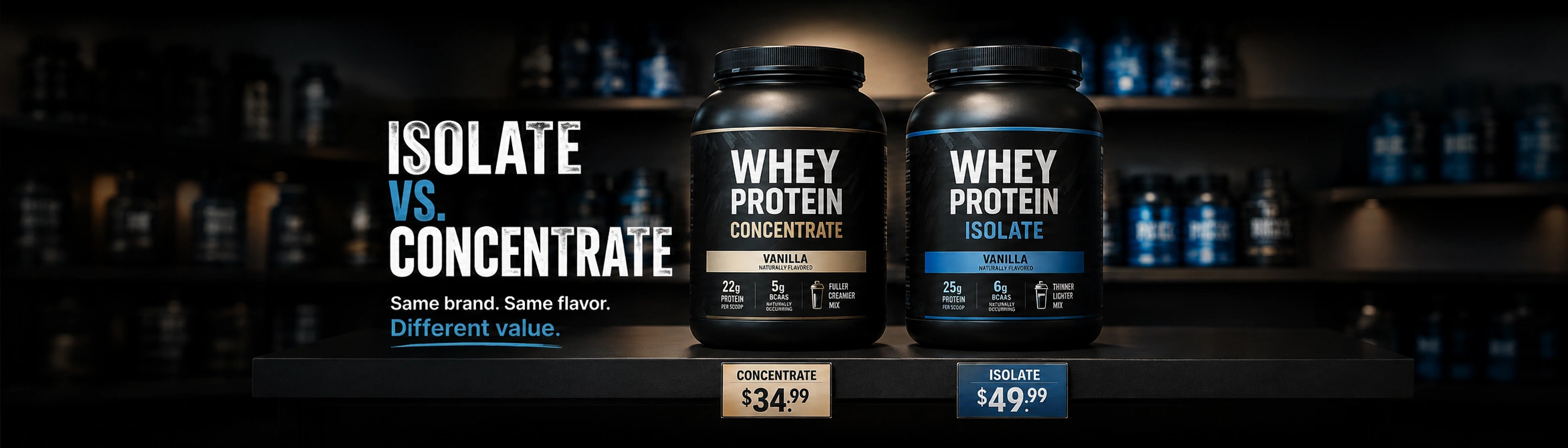
Same brand, same flavor, and one costs noticeably more. What "isolate" actually means, who genuinely benefits, and when concentrate is the smarter buy.
Two tubs, same brand, same flavor, sitting on the same shelf, and one costs noticeably more because the label says "isolate." Before you pay the difference, it's worth knowing what that word buys, because for some people it's genuinely worth it and for most beginners it isn't.
Both start as whey. The difference is filtration. Concentrate is the standard version: roughly 70 to 80 percent protein by weight, with a little more lactose and fat left in. Isolate is filtered further: around 90 percent protein or more, with most of the lactose and fat removed. More processing, more protein per scoop, higher price.
That's the entire story. There's no secret muscle-building property in the isolate tub. Protein supports muscle growth and recovery when it's paired with training, and it does that job in both versions.
| Concentrate | Isolate | |
|---|---|---|
| Protein per scoop | Around 20 to 24 g | Around 25 to 27 g |
| Lactose | Some remains | Mostly removed |
| Fat and carbs | A little more | A little less |
| Texture in water | Fuller, creamier | Thinner, lighter |
| Price | Standard | Noticeably higher |
Exact numbers vary by product, which is why we wrote a guide on reading the label. The pattern holds.
The strongest case has nothing to do with muscle: it's your stomach. If a concentrate shake reliably leaves you bloated or worse, leftover lactose is the usual suspect, and isolate solves a real daily problem. For a lot of people that alone justifies the difference.
The second case is strict dieting. On a hard cut, every scoop's calories get audited, and isolate delivers more protein with less of everything else. The third case is simple preference: some people just like the thinner mix. That's allowed to be the reason.
If concentrate sits fine with you and you're not counting every last carb, the isolate premium buys you a rounding error. The muscle doesn't check the label. It gets amino acids either way, and the money saved over a few tubs of concentrate is real food, which will always matter more than the difference between 80 and 90 percent filtration.
There's a version of this industry that would never print the previous paragraph. We're trying not to be it.
Buy isolate if dairy argues with you or your cut is strict. Otherwise buy concentrate and spend the difference on groceries.
question: I get bloated after shakes. Is that the whey itself? answer: More often it's the lactose that concentrate carries. An isolate is the first thing to try, and if shakes still cause trouble, a non-dairy protein or a chat with a professional is the next step. question: Can I mix the two, or switch between them? answer: Freely. They're the same protein at different filtration levels, so many people keep concentrate for normal days and isolate for cutting phases. Nothing about switching needs managing. question: Where does casein fit into this? answer: Casein is the slow-digesting milk protein, often used before bed. It's a comfort-and-preference product more than a requirement, and it's a topic for its own article.